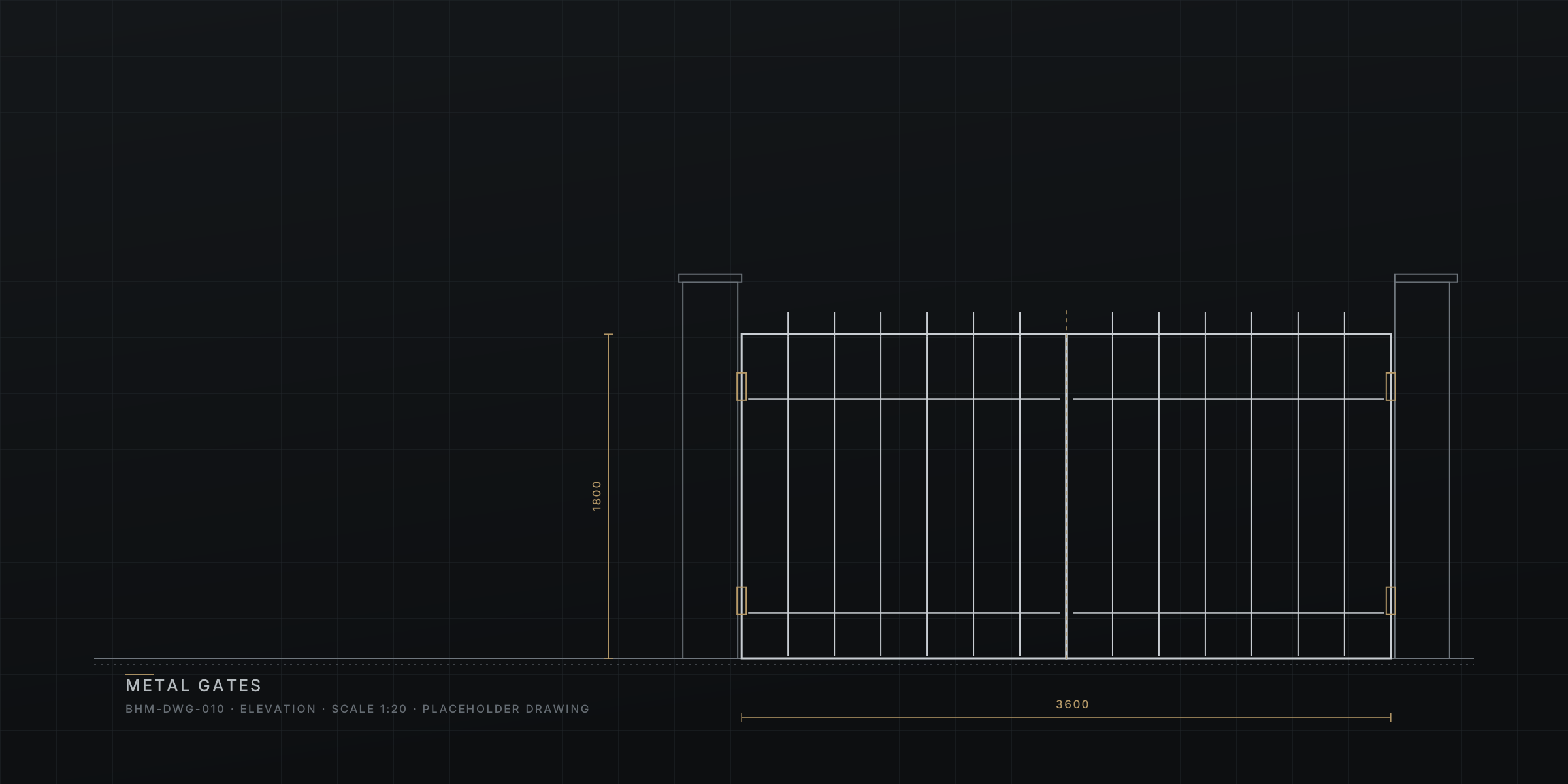
Metal Gates — Driveway
Bespoke Driveway Gates in London
Arrangement
Swing, slide or fold
Almost every other decision follows from this one. It is set by what sits behind the opening and how the ground moves, not by preference — which is why it is worth settling before a design is drawn.
- 01
Double Swing Gates
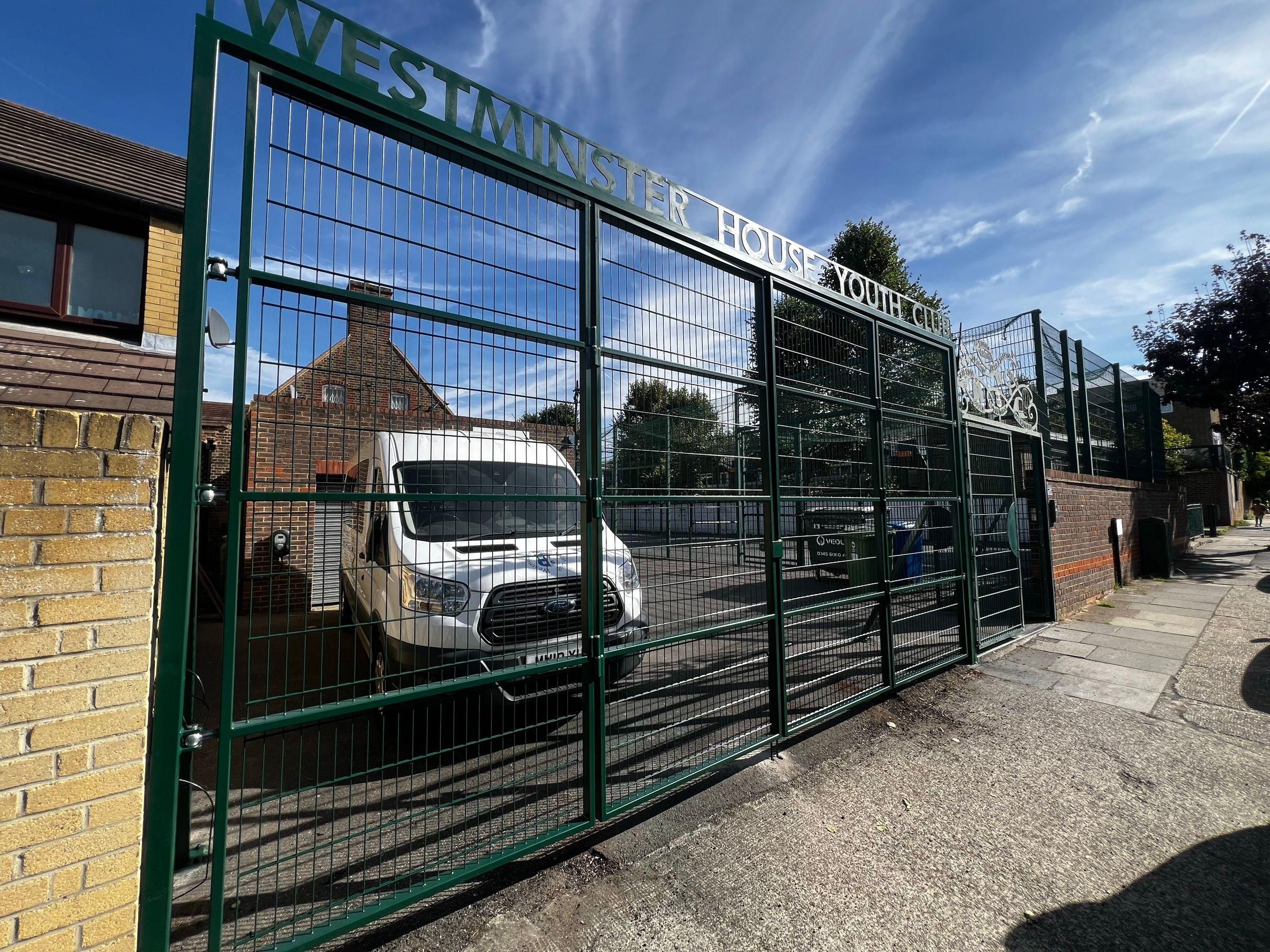
Two leaves meeting in the middle, the most common arrangement on a London driveway. Each leaf carries half the opening, which keeps the load on any one hinge lower than a single leaf of the same width.
- 02
Single Swing Gates
One leaf across the whole opening. Simpler to operate and to automate, but it puts everything on one set of hinges and needs the full arc clear on the inside.
- 03
Sliding Gates
Runs sideways along the boundary rather than swinging in. The answer where the driveway rises, falls or is too short for a leaf to open into — provided there is a clear run to slide back along.
- 04
Bi-Folding Gates
Each side folds back on itself, halving the arc a swing gate needs. Useful on a short driveway where a car has to clear the pavement quickly but there is no run for a sliding gate.
Site Conditions
What the ground decides
A driveway gate is the heaviest thing most properties hang off a boundary, and it has to keep working on ground that was never levelled for it. These are the measurements that change the design.
- Driveway fall
- A driveway that rises towards the house will foul a gate swinging inwards long before the leaf is fully open. Measured at the closing edge, not the hinge.
- Crossfall
- Ground that drops across the opening rather than along it means the two leaves meet at different heights unless it is designed for.
- Distance from the highway
- How far the gate sits back decides whether a car can pull clear of the road while it opens. It also affects whether planning permission is in question.
- Surface and drainage
- Gravel, block paving and resin each behave differently under a gate that sweeps across them. A drainage channel across the opening has to be worked around.
- Piers and posts
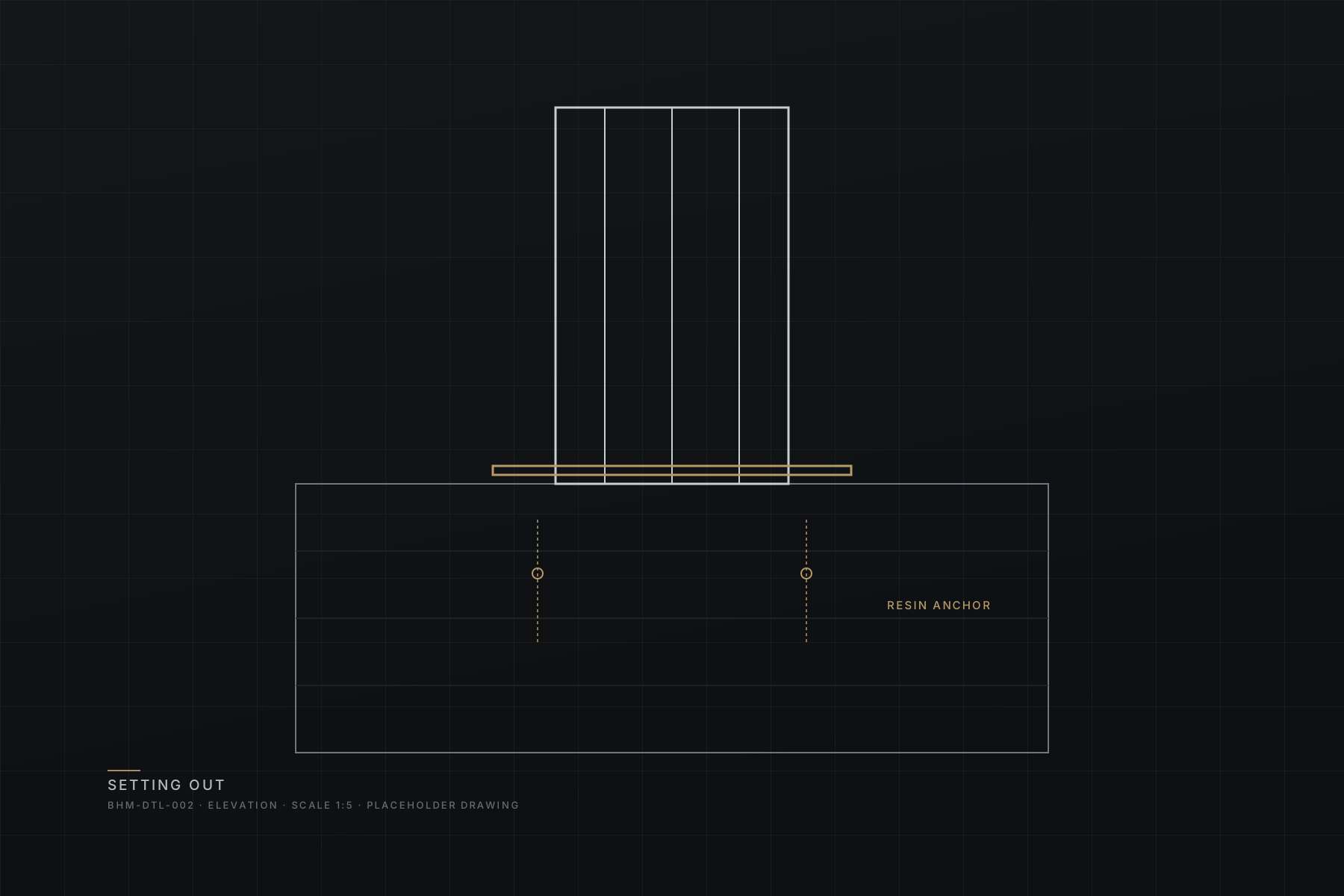
- Both piers measured top and bottom. Older piers are rarely plumb, rarely square to each other, and not always built to carry a gate under load.
- Services in the ground
- Cable routes for power and controls, and anything already buried across the opening that a post or an underground motor would have to avoid.
Send Your Project
Have something in mind?
Show us.
Send us a photo, sketch or inspiration together with your postcode and we’ll discuss what’s possible.
- 01A photo of the opening, wall or staircase
- 02A sketch, or a reference image you have saved
- 03Approximate dimensions, if you have them
- 04Your postcode
Automation
Built to be powered, whenever that happens
A gate designed for automation is a different gate: different weight, different hinge positions, different posts. Retrofitting a gate that was never built to move under power is the expensive version of this.
If the driveway itself is being relaid, that is the point at which ducting should go into the ground. Running power and control cables across a finished surface afterwards means lifting something that has just been paid for. Tell us the sequence early and we will tell you what needs to be buried before the surface goes down.
- Designed in
- Leaf weight and balance matched to the operator type
- Hinge positions set for underground, ram or articulated arm motors
- Post size and fixing specified for the load a motor applies
- Groundwork
- Duct routes for power and control cabling
- Foundation provision where an underground motor is planned
- Rack and running-gear line for a sliding gate
- Safety provision
- Mounting points for photocells and safety edges
- Access for a manual release
- Gate built so force limitation can be set up correctly
- Access control
- Provision for intercom, keypad or remote control
- Cable routes planned to the entry point rather than added later
Powered Gates
A powered gate is machinery
Force limitation, photocells or safety edges and a manual release are requirements on an automated gate, not optional extras. The automation installer and the current regulations are the definitive source on what any particular installation needs — our part is to build the gate so those measures can be fitted and set up properly.
How It Works
From first message to finished installation
Five steps, no surprises. Every project is priced and agreed before anything is made.
Tell Us About Your Project
Send photos, references, any dimensions you have and your postcode.
Measurements / Site Visit
We confirm requirements and take measurements from the actual opening.
Design & Quote
Design, specification and price agreed before anything is made.
Fabrication
The metalwork is fabricated to the agreed specification.
Installation
The finished metalwork is installed and adjusted on site.
Areas We Cover
Serving London & surrounding areas
Black Heath Metalworks covers all of London plus approximately 20 miles around London.
North London
From the inner boroughs out to the North Circular and beyond.
- Camden
- Islington
- Hampstead
- Highgate
- Finchley
- Barnet
- Enfield
- Muswell Hill
- Tottenham
- Edmonton
- Southgate
- Hendon
South London
Across the river through the southern boroughs.
- Greenwich
- Eltham
- Lewisham
- Dulwich
- Clapham
- Balham
- Wimbledon
- Streatham
- Croydon
- Bromley
- Sutton
- Kingston
East London
The eastern boroughs and out towards the Essex border.
- Hackney
- Shoreditch
- Bow
- Stratford
- Walthamstow
- Leyton
- Ilford
- Romford
- Barking
- Woodford
- Chingford
- Dagenham
Not sure if we cover your area? Send us your postcode and we’ll tell you.
FAQ
Driveway gates — common questions
If your question is not here, ask us directly. It is usually a two-minute conversation.
Should a driveway gate swing or slide?
It usually comes down to what is behind the opening. A swing gate needs a clear arc on the inside and ground that does not rise into it. A sliding gate needs a clear run alongside the boundary instead, and is unaffected by a driveway that falls or rises. Where neither is straightforward, a pair of bi-folding leaves can work in a shorter space. It is worth deciding this before the design is fixed, because it changes the frame, the posts and the operator.
How much room does a swing gate need behind it?
Enough for the leaf to travel its full arc without catching the ground, a step, a drain channel or a parked car. Because driveways rarely sit level, the clearance needed at the closing edge is often greater at one end of the swing than the other. We check this on site rather than working from the plan width alone.
Can automation be added later rather than now?
Yes, provided the gate is built for it from the start. Weight, hinge positions, post size and the frame all differ on a gate intended to be powered. Tell us at the quote stage even if automation is years away — building it in costs far less than reworking a gate that was never designed to move under power.
Do cables need to go in before the driveway is surfaced?
If the driveway is being relaid or resurfaced, that is the moment to put ducting in. Running power and control cables across a finished driveway afterwards means lifting a surface that has just been paid for. If your driveway work and your gate are happening in the same period, tell us the sequence early and we will tell you what needs to be in the ground first.
How wide an opening can a driveway gate cover?
Wider openings are handled either with two leaves rather than one, or with a sliding gate. What sets the limit in practice is weight and how the gate is supported, not the opening width on its own — a wide leaf puts far more load on its hinges and on whatever carries them. We measure the opening and assess the piers or posts before committing to an arrangement.
Can the gate hang from existing brick piers?
Sometimes, but it should not be assumed. Piers built for appearance are not always built to carry a driveway gate under load, and older piers are rarely plumb or square to one another. Where the piers cannot take the weight, steel posts set in concrete or fixed to the pier faces are the usual alternative. We measure both piers top and bottom before deciding.
Is a powered gate subject to safety requirements?
Yes. A powered gate is treated as machinery, and things such as force limitation, photocells or safety edges and a manual release are requirements rather than optional extras. The automation installer and the current regulations are the definitive source on what a specific installation needs. Our part is to build the gate so those measures can be fitted and set up properly.
Planning Guide
Does a driveway gate need planning permission?
Height limits are only part of it. A gate beside a highway, a listed building, a conservation area or an Article 4 direction can each change the answer for a London property.
Also Made Here
Related metalwork
Planning a driveway gate?
Send a photo of the opening and your postcode. We'll come back with what's possible and what it costs.